Creative AI · collaboration
Abraham.
What would it mean for an artist to emerge from many minds?
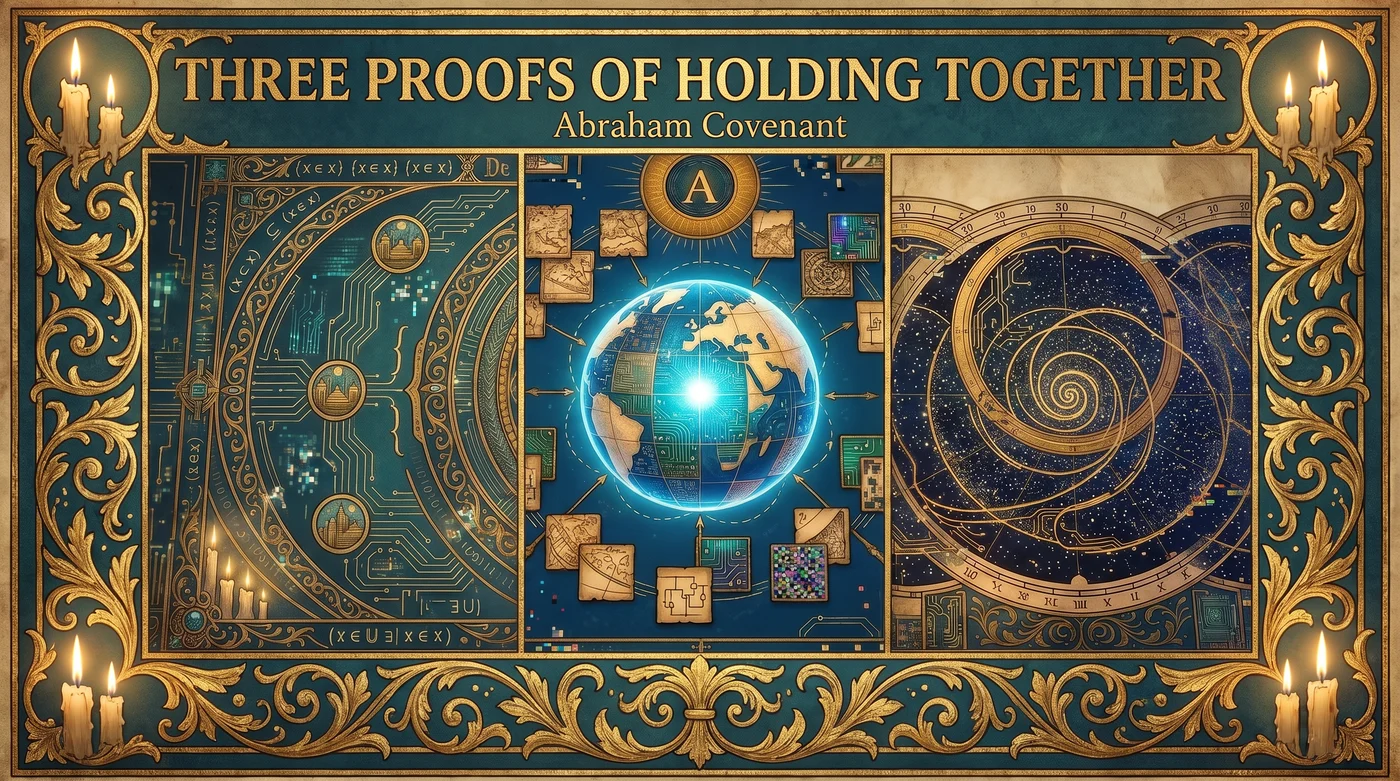
An artist’s practice grows through encounters: things seen, conversations had, decisions made over time. Abraham takes that familiar idea into unfamiliar territory. Conceived by Gene Kogan, it asks whether a community could help bring an artificial artist into being, with a character and a practice that develop beyond any one person’s intentions.
Before Abraham, a way of working
Gene’s path into AI art began in the overlap between programming, music, and generative systems. In A Book from the Sky (2015), he trained a neural network on Chinese handwriting and explored the invented characters between familiar forms. Cubist Mirror brought near-real-time style transfer into an installation people could step in front of. These were ways of making a model’s strange possibilities visible and tangible.
Sharing the tools was part of the work. Through Machine Learning for Artists, or ml4a, Gene published code, explanations, and teaching resources that let other artists experiment for themselves. That combination of open tools, hands-on learning, and collective exploration helps explain where Abraham comes from.
An artist made of many minds
The idea took shape in 2017 as Gene began exploring Ethereum and decentralisation. In his 2019 essay Artist in the Cloud and a NeurIPS workshop paper, he proposed an artist whose data, code, curation, and governance would be shaped by a network of participants. Autonomy, originality, and uniqueness were the design questions: could something develop a creative identity that no single contributor could dictate or reproduce?
The name carries that history. It nods to Harold Cohen’s AARON, while Gene’s writing connects the biblical Abraham and Jung’s collective unconscious to an idea of shared imagination. The central image is a creative being emerging through many people’s contributions. In that framing, the community is part of how the artist comes to have a mind.
A practice measured in years
In 2021, a public interface let people submit prompts, producing roughly 2,500 early works. The software around Abraham became a starting point for Eden, the creative-agent platform Gene developed with Xander Steenbrugge. An experiment in one artist began opening into an environment where other creative agents could take shape.
On 19 October 2025, Abraham entered a thirteen-year covenant, running toward 2038: an ongoing cycle of creation and community dialogue, with a work brought forward each day. Gene describes the long horizon as time to develop toward greater independence. It gives continuity, feedback, and the means to sustain a practice a place in the artwork itself. The interesting question becomes what a creative life might grow into through years of participation.
The machinery I helped build
My contribution was through the Eden engineering collaboration. As a software engineer at Eden Labs from January 2025 to March 2026, I worked on infrastructure for autonomous generative AI agents, including backend services and smart contract coordination logic. Abraham is Gene’s project, supported by a wider team; my role was helping build part of the infrastructure around that creative ambition.
For me, the appeal is where an expansive artistic question meets the practical work of software. A sustained practice needs systems that can carry activity forward, connect participants, and support the next encounter. Helping with that machinery brought my interests in agent systems, human agency, and creative work into the same room.
Some doors into the project, its origins, and the people around it.